Key Takeaways
- Coptic Orthodox icons are a unique form of sacred art, deeply rooted in ancient Egyptian Christian traditions and distinguished by their flat, frontal style and expressive features.
- They serve as “windows to heaven,” conveying profound theological meaning and spiritual narratives rather than mere realistic depictions, inviting worshippers into contemplation and prayer.
- Understanding the symbolism and significance of these icons enhances their value, making them cherished spiritual tools and meaningful gifts for individuals and churches alike.
In the vibrant tapestry of Christian art, Coptic Orthodox icons hold a truly distinctive and revered place. Originating from Egypt, the ancient heartland of Christianity, these sacred images are far more than mere decorations; they are profound expressions of faith, rich in history, symbolism, and spiritual significance. For many Australian Christians, particularly within the Coptic Orthodox community, these icons are an essential part of their spiritual journey and a tangible link to their heritage.
This comprehensive guide aims to unravel the mysteries and beauty of Coptic Orthodox icons. We’ll delve into their unique artistic style, explore the deep theological meanings embedded within their colours and forms, and understand why they continue to be cherished as powerful tools for prayer and contemplation. Whether you’re looking to purchase an icon, deepen your understanding, or simply appreciate this remarkable art form, join us as we explore the captivating world of Coptic iconography.
The Historical Roots of Coptic Icons: A Journey Through Time
The story of Coptic icons is inextricably linked to the history of Christianity in Egypt, one of the earliest centres of the Christian faith. From the desert monasteries to bustling urban churches, Coptic art evolved over centuries, drawing inspiration from various cultural currents while maintaining its unique spiritual identity. Understanding this rich heritage helps us appreciate the depth and authenticity of each icon.
Ancient Egyptian Influence on Early Christian Art
Long before Christianity arrived, ancient Egypt boasted a sophisticated artistic tradition, particularly in funerary art and religious imagery. Early Coptic Christians, many of whom were descendants of these ancient Egyptians, naturally integrated some of these indigenous artistic conventions into their new faith. This fusion created a distinct visual language.
Elements such as the emphasis on large, expressive eyes, a certain flatness in rendering figures, and a focus on symbolic representation over strict realism can be traced back to Pharaonic art. This cultural borrowing wasn’t an imitation but a transformation, repurposing familiar aesthetics to convey Christian truths. The result was an art form that felt both ancient and profoundly new, deeply rooted in the land and its people.
The Development of Early Christian Art in Egypt
As Christianity flourished in Egypt, particularly from the 3rd and 4th centuries onwards, Coptic art began to solidify its unique characteristics. The desert fathers, the early monks of Egypt, played a crucial role in shaping the spiritual landscape and, by extension, the artistic expressions of the Church. Their ascetic ideals and deep theological insights found expression in the solemnity and symbolic richness of the icons.
Early Coptic icons were often painted on wood or linen, using natural pigments. These early examples, many found in monastic centres like Bawit and Saqqara, demonstrate a clear departure from Greco-Roman naturalism, favouring a more stylised and spiritual aesthetic. This evolution marked the birth of a truly distinct Christian art form, one that prioritised the sacred message over worldly representation.
Distinctive Features of Coptic Iconography: A Visual Language
What makes a Coptic Orthodox icon instantly recognisable? It’s a combination of specific artistic conventions that collectively form a powerful visual language. These features are not arbitrary stylistic choices but are deeply intentional, designed to draw the viewer beyond the physical world into a realm of spiritual contemplation. They communicate the meaning and significance of the sacred narrative.
Flatness and Frontality: Beyond Three Dimensions
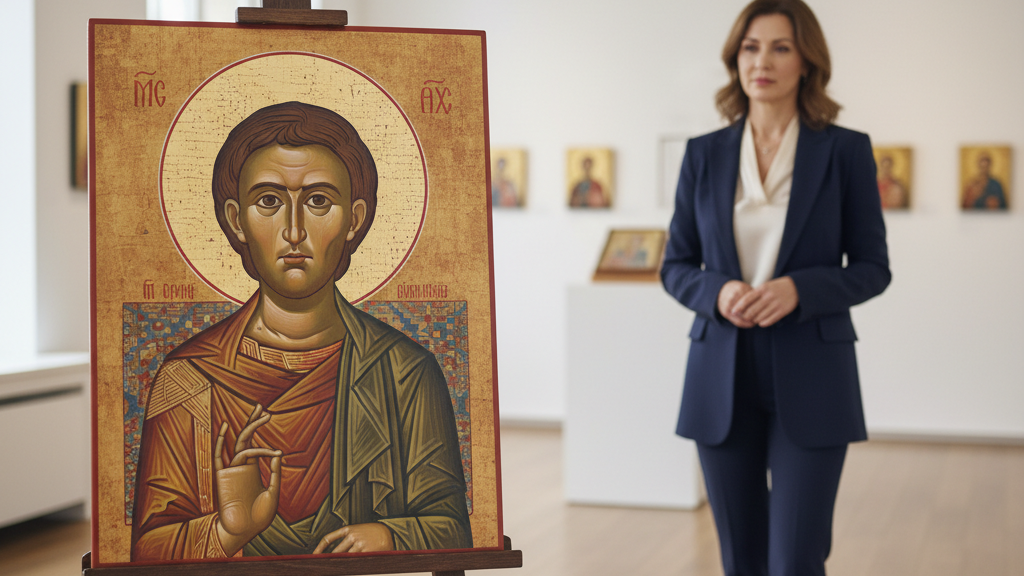
Unlike Western Renaissance art that strived for three-dimensional realism, Coptic icons embrace flatness and a lack of perspective. Figures are often depicted in a frontal pose, directly facing the viewer, or in a stylised profile. This isn’t due to a lack of artistic skill but a deliberate theological choice.
The flat, two-dimensional quality prevents the icon from being mistaken for an idol or a mere portrait. It signifies that the figures inhabit a different reality – the eternal, heavenly realm – and are not bound by earthly dimensions. The frontality creates a direct, personal encounter, as if the saint or Christ is looking directly at the worshipper, inviting them into communion.
Large Eyes and Expressive Faces: Windows to the Soul
One of the most striking features of Coptic icons is the depiction of large, often almond-shaped eyes. These eyes are not merely anatomical details; they are considered “windows to the soul,” conveying deep spiritual insight, wisdom, and compassion. They often appear to gaze beyond the viewer, into eternity, reflecting the divine presence.
Faces in Coptic icons are generally stylised, not individualised portraits. They convey a sense of serenity, spiritual intensity, and often, a gentle solemnity. Details like elongated noses, small mouths, and simplified features contribute to this otherworldly aesthetic, directing attention away from worldly beauty and towards spiritual essence. The expressions are designed to evoke reverence and a connection to the sacred.
Vibrant Colours and Symbolism: A Palette of Faith
The colours used in Coptic iconography are not chosen arbitrarily; each hue carries specific symbolic meaning, adding layers of theological depth to the sacred image. The palette is often rich and vibrant, reflecting the spiritual joy and glory of the heavenly kingdom.
- Gold: Often used for halos and backgrounds, gold symbolises divine light, eternity, and the uncreated glory of God. It represents the heavenly realm where time and space cease to exist.
- Red: Represents sacrifice, martyrdom, divine love, and the Blood of Christ. It’s frequently seen in the garments of martyrs or in scenes of passion.
- Blue: Symbolises heaven, truth, and divinity. It is often used for the garments of Christ and the Theotokos (Virgin Mary), signifying their heavenly connections.
- White: Represents purity, holiness, resurrection, and divine light. It is often used for the robes of angels or saints in their glorified state.
- Green: Symbolises life, renewal, growth, and the Holy Spirit. It can be found in landscapes or details, representing spiritual vitality.
The careful selection and combination of these colours contribute significantly to the icon’s spiritual message, making it a profound visual sermon.
The Profound Meaning Behind Coptic Icons: Windows to Heaven
To truly understand Coptic Orthodox icons is to grasp their profound spiritual purpose. They are not merely religious paintings but sacred objects that serve specific functions within the life of the Church and the personal devotion of believers. Their meaning transcends aesthetics, acting as conduits of grace and instruments of prayer.
Windows to Heaven: Bridging the Earthly and the Divine
Perhaps the most fundamental understanding of an icon is that it serves as a “window to heaven.” When a worshipper stands before an icon, they are not simply looking at a picture; they are gazing upon a representation of a saint, Christ, or the Theotokos, who are themselves present in the heavenly realm. The icon acts as a bridge between the earthly and the divine, allowing for spiritual communion.
This concept is central to Orthodox theology. The icon does not contain the divine essence, but it participates in the grace of the prototype it depicts. It facilitates prayer, contemplation, and a sense of presence, helping the faithful to focus their minds and hearts on God and the saints.
Narrating Sacred Stories and Theological Truths
Coptic icons are also powerful didactic tools, conveying complex theological truths and sacred narratives in a visually accessible format. For centuries, when literacy was not widespread, icons served as “books for the illiterate,” teaching the stories of the Bible, the lives of saints, and the doctrines of the Church.
Each element within an icon – from the posture of the figures to the objects they hold – carries symbolic weight, contributing to the overall narrative. For example, specific gestures, colours, and even architectural backgrounds provide clues to the event being depicted and its spiritual significance. This makes icons a rich source of spiritual instruction and meditation.
Invoking Saints and Spiritual Presence for Intercession
Devotion to saints is a cherished aspect of Coptic Orthodox Christianity, and icons play a vital role in this practice. When we venerate an icon of a saint, we are honouring the saint themselves and seeking their intercessions before God. The icon reminds us of their virtuous lives and their continued prayers for us in heaven.
The presence of icons in churches and homes creates a sacred atmosphere, filling the space with the spiritual presence of those depicted. They remind believers that they are part of the “communion of saints,” a spiritual family that spans heaven and earth. This sense of connection and shared faith is a deeply comforting and strengthening aspect of Coptic spirituality.
In Coptic Orthodox theology, an icon is not worshipped in itself, but venerated as a sacred image that points beyond itself to the divine prototype. It is a tangible link, a window through which we glimpse the eternal, drawing us closer to God and His saints.
Common Themes and Figures in Coptic Icons: A Gallery of Faith
The vast repertoire of Coptic Orthodox icons covers a wide array of themes, depicting Christ, the Virgin Mary, saints, angels, and significant biblical events. Each theme holds particular meaning and spiritual importance for the faithful, reflecting the rich narrative of salvation history and the lives of those who have exemplified Christian virtue.
The Holy Family: Icons of Divine Love and Humility
Icons depicting the Holy Family, particularly the Virgin Mary (Theotokos) with the Child Jesus, are among the most beloved and prevalent. These icons often portray the tender relationship between Mother and Child, symbolising divine love, humility, and the Incarnation of God.
One common depiction is the “Virgin of Tenderness” (Eleousa), where the Child Jesus lovingly presses His cheek against His Mother’s. Other icons show the Theotokos as “Hodegetria” (She Who Shows the Way), pointing to Christ as the path to salvation. These images are powerful reminders of God’s love for humanity and the central role of the Virgin Mary in salvation history.
Saints and Martyrs: Pillars of Faith and Intercessors
The Coptic Orthodox Church has a rich tradition of venerating saints and martyrs, many of whom suffered persecution during various historical periods. Icons of these holy figures serve as visual testaments to their unwavering faith and their ultimate sacrifice. They inspire believers to live lives of piety and courage.
- St. George: A revered warrior saint, often depicted on horseback slaying the dragon, symbolising the triumph of good over evil.
- St. Mark: The evangelist who brought Christianity to Egypt and the first Pope of Alexandria, often shown holding his Gospel.
- St. Menas: An Egyptian martyr, frequently depicted with two camels, representing his journey and steadfastness.
- Pope Kyrillos VI: A beloved modern saint, revered for his humility and spiritual power.
These icons are not merely historical portraits but spiritual presences, inviting the faithful to seek their intercession and emulate their virtues.
Biblical Scenes: Visualising Salvation History
Beyond individual figures, Coptic icons also depict significant events from the Old and New Testaments, illustrating key moments in salvation history. These narrative icons help believers visualise and meditate upon the great acts of God.
Common scenes include the Nativity of Christ, the Baptism of Christ, the Crucifixion, the Resurrection, and the Ascension. Each scene is rendered with symbolic details that convey its theological meaning, allowing worshippers to immerse themselves in the sacred narrative and reflect on its implications for their own faith journey. These icons serve as powerful reminders of God’s continuous work in the world.
Ready to find your perfect Coptic icon?
Discover our exquisite collection of authentic Coptic Orthodox icons, handcrafted with care and reverence.
The Process of Creating Coptic Icons: Art, Prayer, and Tradition
The creation of a Coptic Orthodox icon is not merely an artistic endeavour; it is a spiritual discipline, a prayerful act rooted in centuries of tradition. Iconographers undertake their work with reverence, understanding that they are not just painting an image, but contributing to a sacred object intended to facilitate communion with God. This meticulous process ensures the icon’s authenticity and spiritual potency.
Traditional Materials and Techniques for Authentic Icons
Authentic Coptic icons are typically crafted using time-honoured materials and techniques. The most common substrate is wood, often prepared with a gesso layer (a mixture of animal glue and chalk) to create a smooth, durable surface. Natural pigments are then mixed with egg yolk emulsion (egg tempera) to create vibrant, lasting colours.
The use of gold leaf for halos and backgrounds is also a traditional practice, signifying divine light and eternity. This careful selection of materials ensures that the icon not only looks beautiful but also endures for generations, becoming a treasured family heirloom or a permanent fixture in a church. The adherence to these traditional methods is crucial for maintaining the integrity and spiritual significance of the icon.
The Role of the Iconographer: A Spiritual Calling
An iconographer is more than just an artist; they are considered a spiritual artisan whose work is deeply intertwined with their faith. Often, iconographers will prepare themselves through prayer and fasting before beginning an icon. They do not seek to express their own artistic genius but rather to faithfully transmit the traditional forms and theological meaning of the Church.
The process of painting an icon is highly disciplined, following established canons and prototypes. While there is room for individual style, the core elements and symbolism must remain consistent with Orthodox tradition. This ensures that each icon, regardless of its creator, serves its primary purpose as a window to the divine, guiding the viewer towards contemplation and prayer.
Caring for Your Coptic Orthodox Icon: Preservation and Respect
Once you acquire a Coptic Orthodox icon, it becomes a cherished spiritual possession. Proper care and respectful display are essential to preserve its beauty and spiritual significance for years to come. These sacred items are not just decorations; they are tools for prayer and objects of veneration, deserving of careful handling.
Display and Placement: Honouring Sacred Space
The placement of your Coptic icon is important, reflecting its sacred role. In homes, icons are typically placed in an “icon corner” or a designated area for prayer, often facing east. This creates a small domestic sanctuary, inviting daily prayer and reflection. Ensure the icon is placed where it won’t be easily knocked or damaged.
Avoid placing icons in areas prone to extreme temperature fluctuations, direct sunlight, or high humidity, as these conditions can damage the wood and paint. A stable, clean environment will help preserve the icon’s integrity. Consider a place of honour, perhaps above a prayer table or in a quiet room, where it can be seen and venerated regularly.
Cleaning and Preservation: Maintaining Its Beauty
Caring for your icon involves gentle cleaning and protection from environmental damage. Here are some steps to help preserve its condition:
- Dust Gently: Use a soft, dry brush or a microfibre cloth to gently dust the surface of the icon regularly. Avoid abrasive materials that could scratch the paint or varnish.
- Avoid Liquids: Never use water, cleaning solutions, or chemical sprays directly on the icon. These can damage the tempera paint and gesso layers. If absolutely necessary for a stubborn mark (which should be rare), consult a professional icon restorer.
- Maintain Stable Conditions: Keep the icon in a room with stable temperature and humidity. Extreme changes can cause the wood to warp or the paint to crack. Avoid placing it near radiators, air conditioners, or open windows.
- Handle with Care: When moving or handling the icon, always hold it by its sides or base, avoiding direct contact with the painted surface. Ensure your hands are clean and dry.
- Consider Protection: For very old or valuable icons, you might consider professional framing with UV-protective glass, though this is less common for traditionally painted icons intended for direct veneration.
By following these simple steps, you can ensure your Coptic Orthodox icon remains a beautiful and meaningful part of your spiritual life for generations.
Frequently Asked Questions About Coptic Orthodox Icons
What is the difference between an icon and a regular painting?
An icon is not merely a religious painting; it is a sacred object created according to established theological and artistic canons. Its purpose is to serve as a “window to heaven,” facilitating prayer and communion with the divine. Regular paintings, while they may depict religious themes, are primarily artistic expressions and do not carry the same liturgical or spiritual function as an icon.
Are Coptic Orthodox icons worshipped?
No, Coptic Orthodox icons are not worshipped. The veneration (honour and reverence) shown to an icon passes to the person or event depicted. Worship (latria) is reserved for God alone. Icons are honoured as sacred images that help believers focus their prayers and connect with the spiritual realm, not as idols.
Why do Coptic icons look different from Western religious art?
Coptic icons developed a distinctive style that prioritises spiritual meaning over naturalistic representation. Features like flatness, frontality, large eyes, and symbolic colours are deliberate choices to depict the heavenly, eternal realm rather than the earthly. Western art, particularly from the Renaissance, often focused on realism, perspective, and human emotion.
Can anyone own a Coptic Orthodox icon?
Yes, anyone can own a Coptic Orthodox icon. While they hold particular significance for Orthodox Christians, many people from various backgrounds appreciate their beauty, historical value, and spiritual depth. They make meaningful gifts and can be a source of inspiration and contemplation for anyone seeking a connection to sacred art.
How can I tell if a Coptic icon is authentic?
Authentic Coptic icons are typically hand-painted using traditional techniques and materials like egg tempera on wood, often with gold leaf. They adhere to established iconographic canons and styles. Reputable sellers, especially those specialising in Orthodox Christian goods, will provide information about the icon’s origin, artist, and materials. Look for consistent stylistic elements discussed in this guide, such as flatness, large eyes, and symbolic colours.
Understanding the intricate world of Coptic Orthodox icons reveals a profound spiritual tradition deeply embedded in centuries of faith and artistic expression. These sacred images are far more than aesthetically pleasing artworks; they are vibrant testaments to Christian belief, serving as windows to heaven that invite contemplation, prayer, and a deeper connection to the divine.
From their ancient Egyptian roots to their distinctive visual language of flatness and symbolic colour, every aspect of a Coptic icon is imbued with significant theological meaning. They narrate sacred stories, invoke the presence of saints, and guide the faithful in their spiritual journey. Whether you are seeking an authentic icon for personal devotion, as a meaningful gift, or for your church, appreciating their true value transforms the act of viewing into an experience of spiritual encounter.
By choosing an authentic Coptic icon, you are not just acquiring a beautiful piece of art; you are embracing a rich spiritual heritage and welcoming a powerful aid to prayer into your home or church. May these sacred images continue to inspire and bless all who encounter them.
Visit Trinity Christian Gift Shop Today
Explore our curated collection of Coptic Orthodox icons, liturgical supplies, and Christian gifts right here in Australia.